Cubera Snapper Fishing in Costa Rica
Target one of the Pacific’s strongest structure fish on a private inshore charter from Jacó, Herradura Bay or Los Sueños.
A hard fight decided in the first few seconds
Cubera snapper are powerful reef predators with heavy bodies and prominent canine teeth. After eating a bait or lure, their first move is often back toward rocks, ledges or reef structure—making immediate pressure and strong tackle essential.
From Jacó and nearby Herradura Bay, crews search rocky points, reefs, islands and changes in bottom structure where bait and current come together. A Cubera can be the main target or part of a mixed inshore plan with roosterfish, jacks, amberjack and grouper.
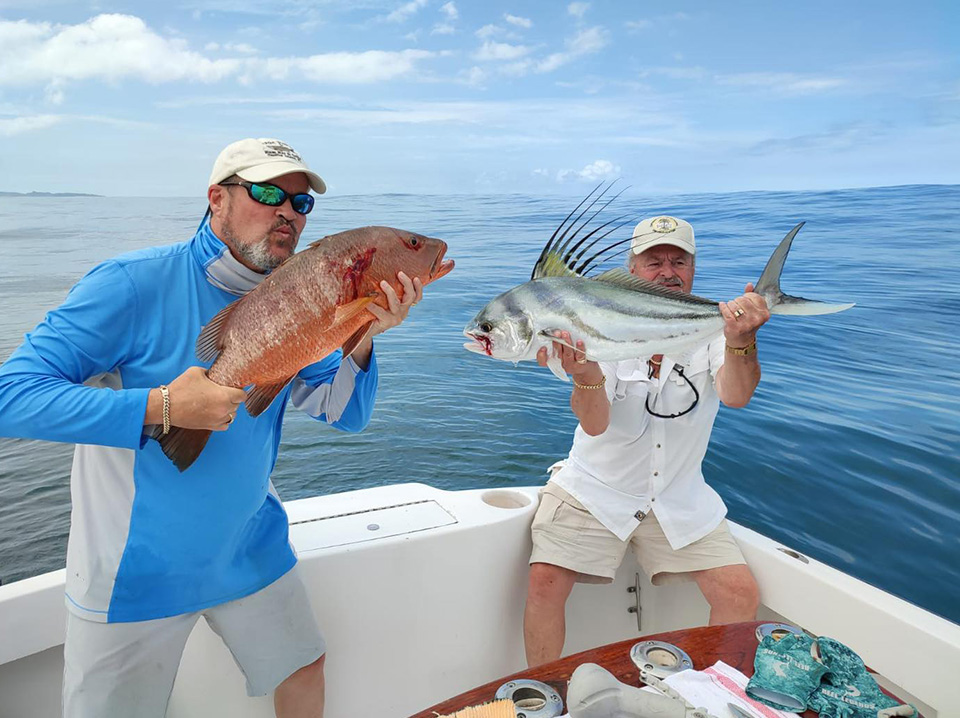
Cubera snapper habitat near Jacó
Cubera do not simply roam every piece of coastline. Captains build the route around structure, bait, current and tide while considering sea conditions and the group’s experience.
Rocky points
Current wraps around headlands and creates ambush zones where snapper can hold close to cover.
Reefs and ledges
Changes in depth and hard bottom give Cubera shelter and access to passing baitfish.
Islands
Rock faces, submerged structure and current breaks may produce opportunities for several inshore predators.
Deeper structure
Vertical jigging or live bait may be used over deeper marks when fish are not feeding near the surface.
Bait concentrations
Finding active bait is often more important than repeatedly fishing a famous location with no life.
Tide and current
The productive side of a reef can change. Local knowledge helps crews time and approach structure safely.
How Cubera snapper are targeted
Live bait
Fresh live bait can be slow-trolled, drifted or positioned near productive structure. The exact bait and presentation depend on what is locally available and how fish are feeding.
Vertical jigging
Heavy metal jigs are worked through the water column and near deep structure. It is physically active and can produce amberjack, grouper and other species too.
Surface poppers
Large poppers can draw explosive surface attacks around rocks and islands when conditions suit casting and fish are active.
Cubera opportunities exist throughout the year
There is no reliable calendar that makes one particular Cubera appear on demand. The Central Pacific offers year-round chances, while bait, current, water clarity, tide, rainfall and sea conditions influence each trip.
December–April
Drier-season conditions are common. Crews may mix Cubera fishing with roosterfish, jacks and other structure targets depending on current reports.
- Year-round Cubera opportunity
- Popular travel period
- Advance boat reservations recommended
May–November
Green-season runoff and changing bait patterns can affect coastal water. June through October is often favored for roosterfish and other inshore fishing, but weather flexibility matters.
- Mixed inshore possibilities
- Snook opportunity July–November
- Possible afternoon rain and trip adjustments
Cubera snapper vs. roosterfish
| Feature | Cubera snapper | Roosterfish |
|---|---|---|
| Primary habitat | Reefs, rocks, ledges and islands | Beaches, rocky points and coastal structure |
| Typical fight | Immediate run toward cover | Fast, powerful runs through more open water |
| Common methods | Live bait, jigs and poppers | Live bait, slow trolling and casting |
| Handling | Captain-led legal and responsible retention decision | Catch and release |
Half-day or full-day Cubera trip?
Half-day inshore
A half day can work because coastal grounds are generally closer than offshore billfish areas. It suits families, beginners and visitors keeping part of the day open.
- Less travel than a typical offshore day
- Good introduction to structure fishing
- Private boat and crew
Full-day inshore
A full day gives the captain more time to locate bait, fish different tide windows, change techniques and visit multiple zones.
- More range and fishing time
- Better for a focused Cubera goal
- Opportunity to mix in other species
Match the boat to your group
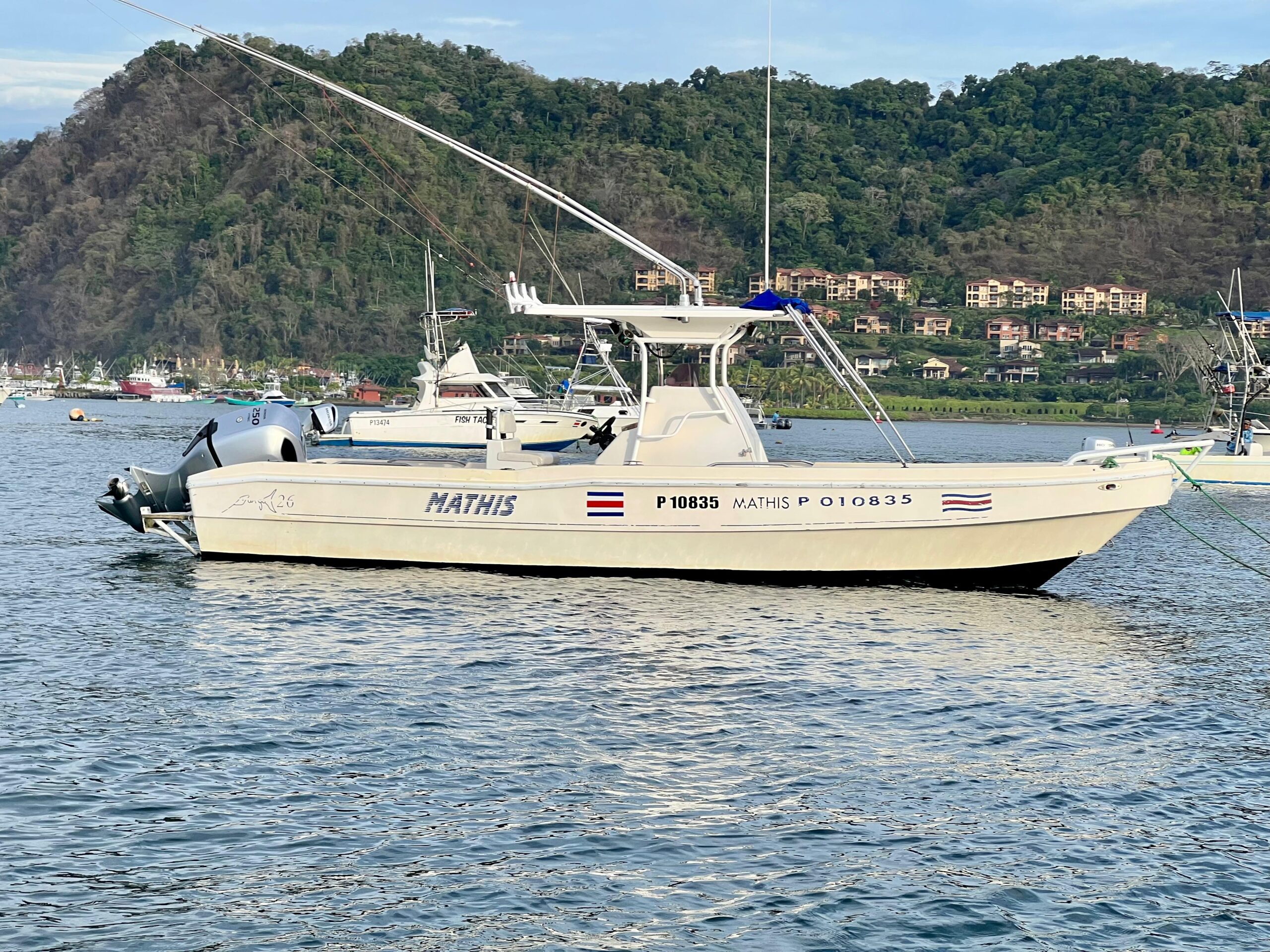
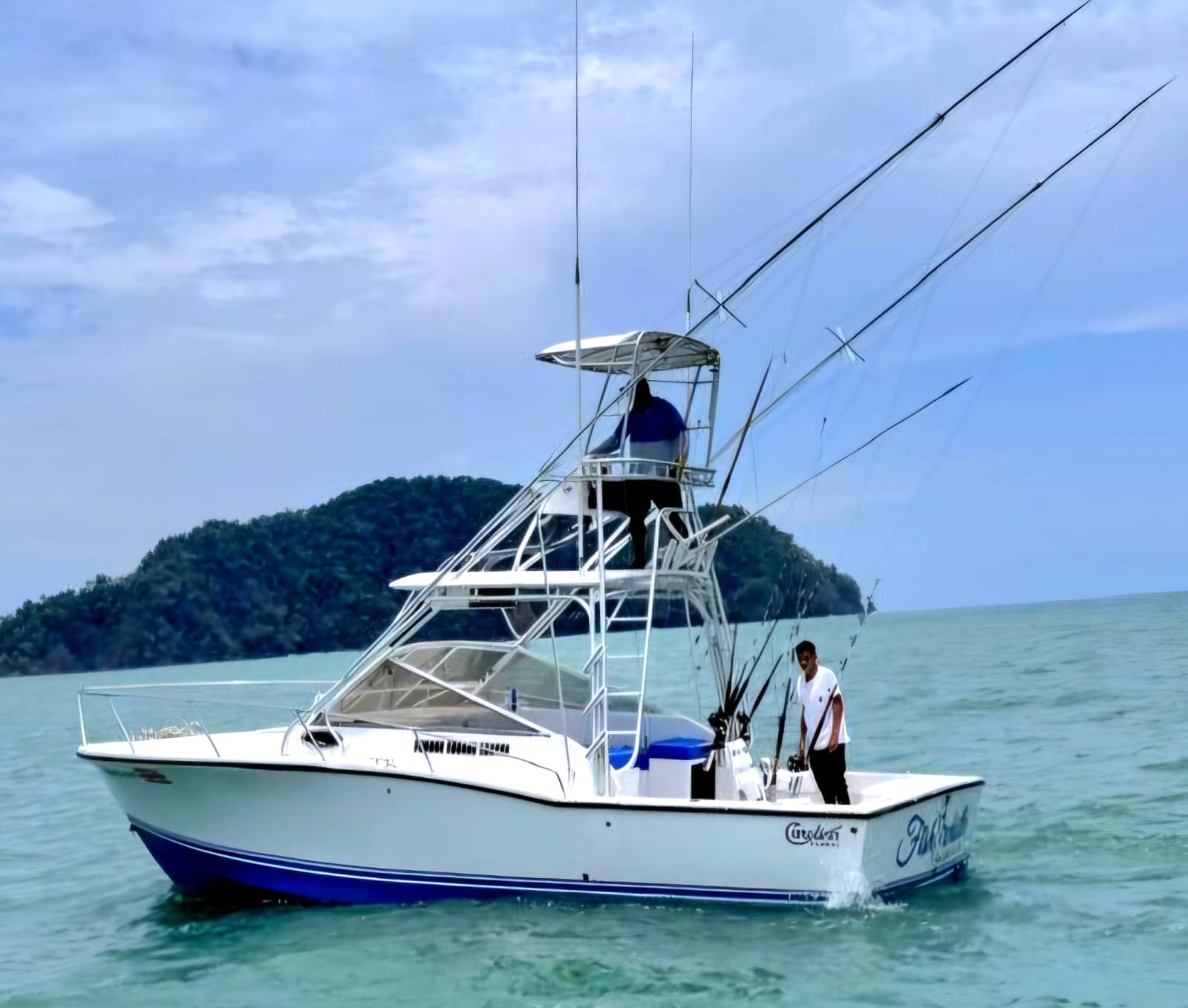
Center consoles are maneuverable and practical for rocks, islands and reefs. A sportfishing boat can add shade, seating, cabin space or a private restroom for guests who prioritize comfort.
- 28ft Center Console: inshore value for small groups.
- 30ft Satisfaction: traditional sportfishing layout for inshore or offshore use.
- 32ft Fish Whistle: more comfort, shade and a private restroom.
Selective harvest protects the fishery
Cubera snapper may be retained only when current regulations, fish condition and captain guidance allow it. Retention is not automatic, and large breeding fish can be especially valuable to the future of the fishery.
Follow current rules
Regulations can change. The captain determines whether a fish may legally and responsibly be kept.
Keep only what is useful
If harvest is appropriate, take a reasonable amount for meals rather than treating every legal fish as automatic retention.
Release carefully
When a fish will be released, minimize handling and photography time and follow the crew’s instructions.
Cubera snapper fishing FAQ
Can you catch Cubera snapper year-round in Costa Rica?
Yes, there are year-round opportunities along Costa Rica’s Pacific coast. Results depend on bait, current, tides, water conditions and fish movement.
Where are Cubera snapper found near Jacó?
Captains search reefs, rocky points, islands, ledges and other hard structure around the Central Pacific coast. The exact route changes with current conditions.
What is the best bait for Cubera?
Fresh live bait is a primary method, but bait availability varies. Crews may also use vertical jigs or surface poppers when conditions fit.
Can beginners catch Cubera snapper?
Yes. The crew explains the technique and helps anglers prepare for the strike. Quick reactions and steady pressure are important because hooked fish immediately seek structure.
Can we keep a Cubera snapper?
Possibly, but only when current regulations and captain guidance allow. Responsible selective harvest and release of important breeding fish help protect the resource.
Is a half-day trip enough?
A half day can work for nearby inshore grounds. A full day offers more range, tide windows and time to locate bait, which is valuable when Cubera is a priority.
Are catches guaranteed?
No. Cubera are challenging wild fish, and no responsible charter can guarantee a catch. The captain uses current reports and conditions to create the strongest available plan.
Related Jacó fishing guides
Check Cubera snapper charter availability
Send your date, number of anglers, where you are staying and whether Cubera is your main target. We’ll recommend a suitable private boat and trip length.
"*" indicates required fields