Yellowfin Tuna Fishing in Costa Rica
Battle one of the ocean’s strongest game fish on a private offshore charter from Jacó, Herradura Bay or Los Sueños.
Powerful runs and a demanding finish beneath the boat
Yellowfin tuna are recognized by their streamlined bodies and bright yellow finlets. A hooked fish may make a fast initial run, then settle into stubborn circles below the boat that test an angler’s technique and patience.
Charters serving Jacó typically depart nearby Herradura Bay or Los Sueños. Captains search offshore for spinner dolphins, working birds, bait schools, current edges and surface feeding activity. Tuna may be the priority or part of a mixed trip with Dorado, sailfish, marlin and wahoo.
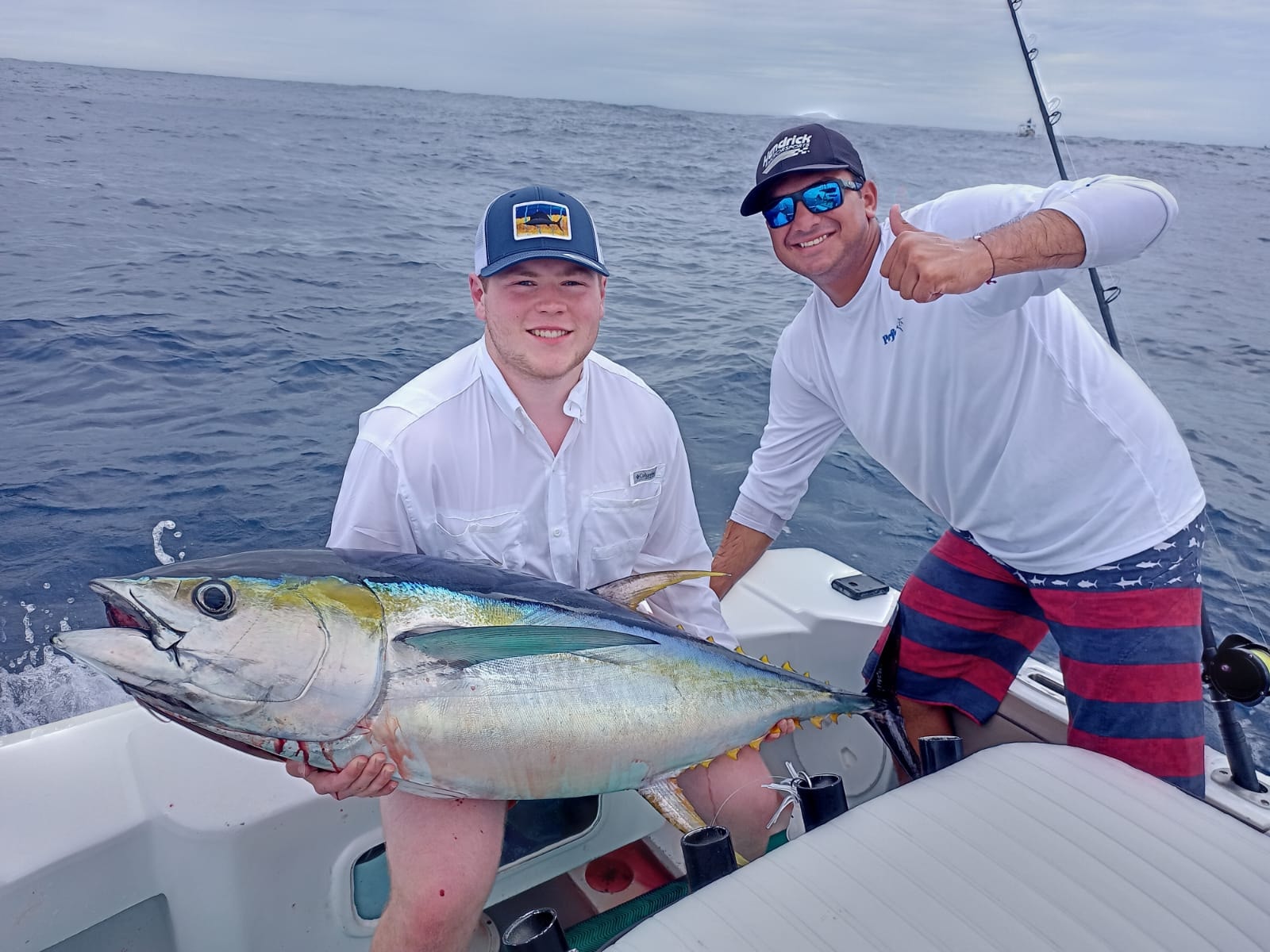
Best time for Yellowfin tuna near Jacó
Yellowfin can be encountered throughout the year. April through October is a strong planning window, with another useful period often seen in November and December. Daily location and abundance still depend on bait, currents, water conditions and moving dolphin schools.
| Period | Tuna outlook | Other offshore possibilities | Planning approach |
|---|---|---|---|
| January–March | Year-round opportunities | Sailfish, marlin and Dorado | Stay open to a mixed-species billfish-season trip. |
| April–June | Strong tuna window develops | Dorado and blue marlin | Watch current reports and surface activity. |
| July–October | Strong planning window | Dorado, marlin and possible wahoo | Allow for green-season weather flexibility. |
| November–December | Useful late-year opportunity | Blue marlin, Dorado and building sailfish action | Book early around holidays and use recent reports. |
How Yellowfin tuna are caught
Spinner dolphins
Yellowfin may travel below dolphin schools while feeding on the same bait. Crews observe dolphins responsibly and look for birds, bait and tuna marks.
Trolling
Cedar plugs, feathers, skirted lures and rigged baits help crews cover water and remain ready for other pelagic species.
Live bait
When tuna are located but selective, fresh live bait can be presented around feeding activity according to the crew’s plan.
Surface casting
Poppers and other casting lures may produce explosive strikes when tuna are feeding visibly and the group has suitable tackle and experience.
Vertical jigging
Jigs can reach fish holding below the surface, including around offshore structure and FADs when conditions allow.
Boat positioning
The captain must anticipate moving fish, avoid cutting them off and keep the fighting line clear during deep circles.
Spinner dolphins can point toward tuna—but never promise them
Dolphins and Yellowfin sometimes feed around the same bait concentrations. Captains look for the complete picture: active birds, bait, surface boils and sonar marks—not simply the presence of dolphins.
Read the activity
Birds diving and bait pushed to the surface can indicate an active feeding event.
Position carefully
The captain approaches without disrupting the school and chooses a trolling or casting angle.
Change tactics
If fish stay deep or ignore one presentation, the crew may switch bait, lure, speed or location.
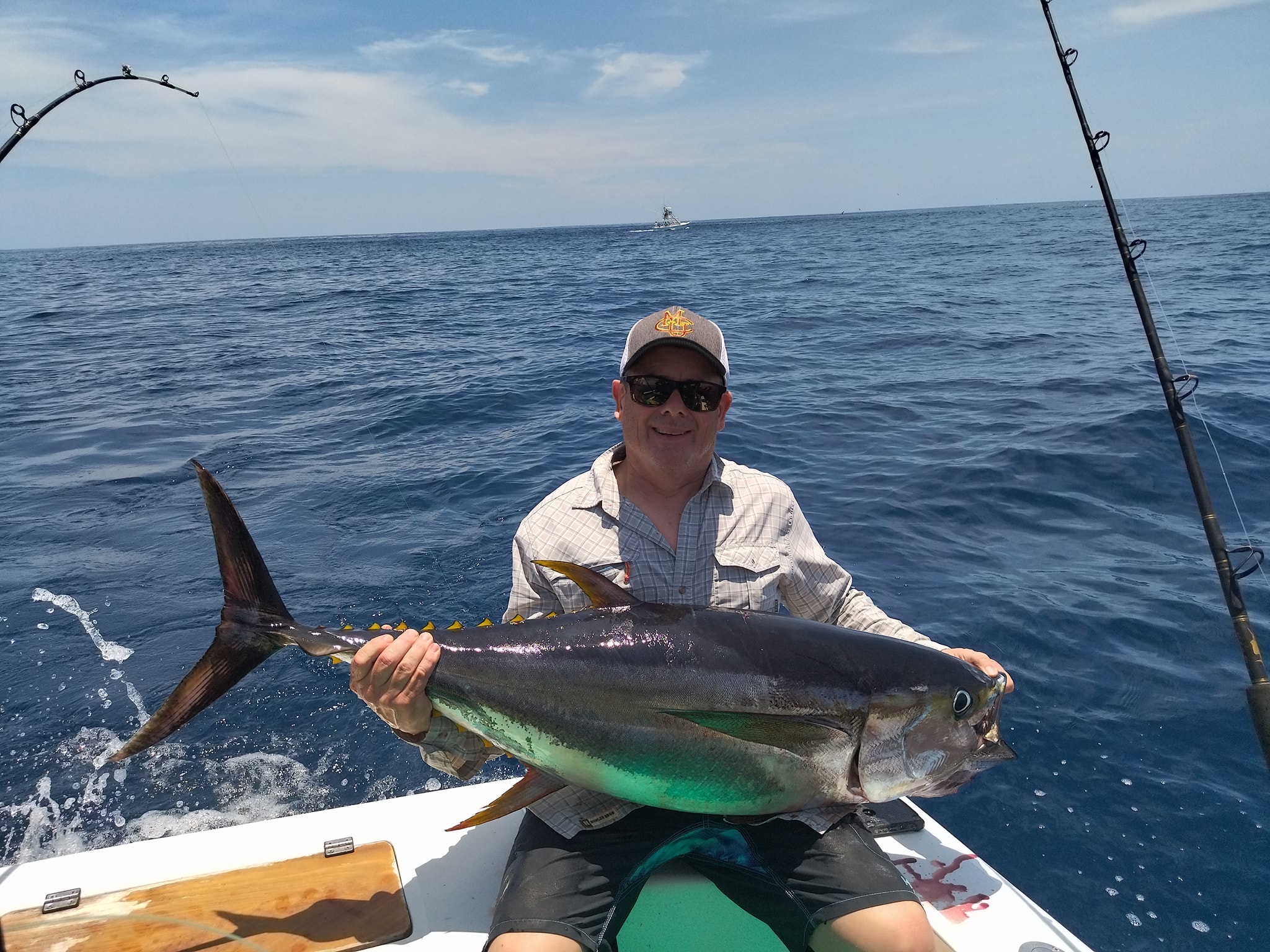
Full-day offshore is the better tuna plan
Dolphin schools and tuna move, so the search can cover significant water. A full day gives the captain more time to locate activity, change tactics and remain flexible for other species.
- Greater range and search time
- Time to follow moving surface activity
- More opportunity to change presentations
- Better mixed-species flexibility
If your schedule only allows a half day, consider inshore fishing near Jacó instead of making offshore tuna the only goal.
Choose for offshore range and passenger comfort
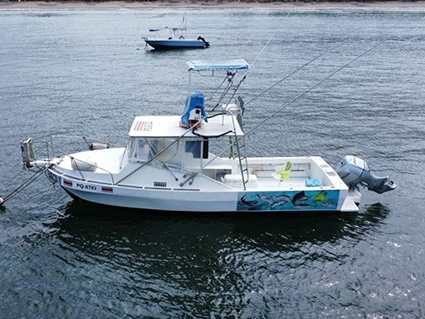
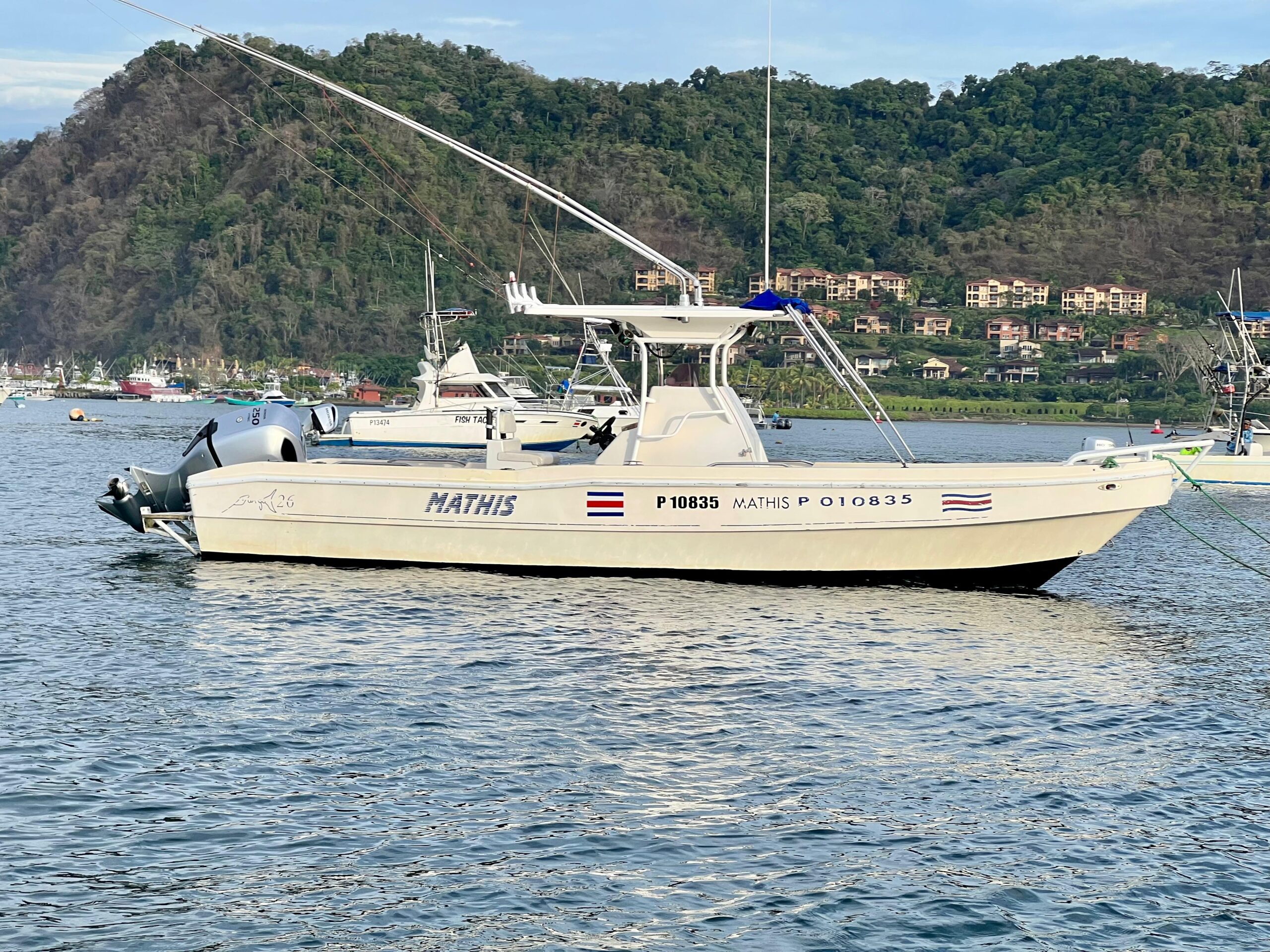
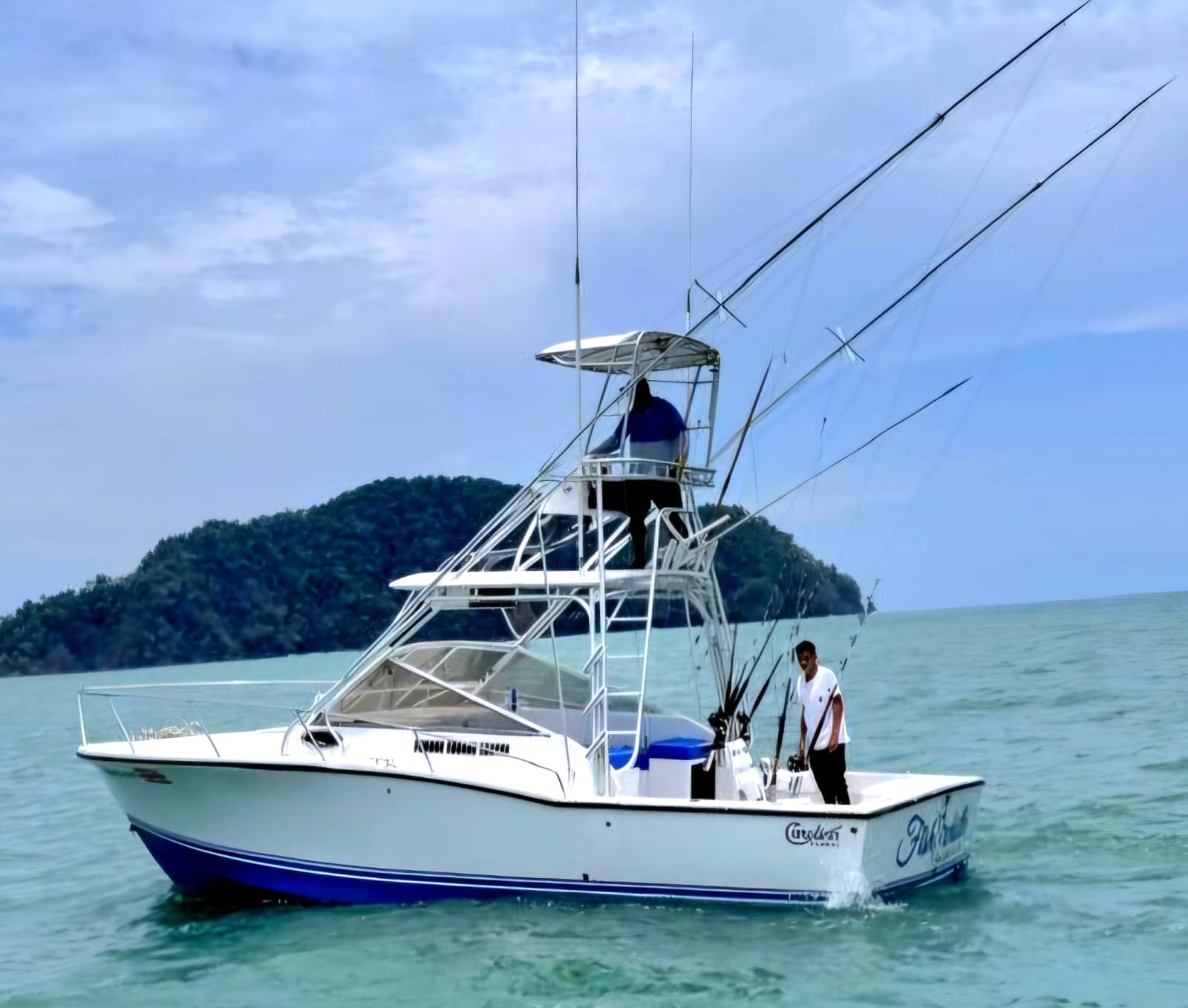
A capable center console may suit a small, experienced group. Couples, families and nervous passengers may prefer more shade, seating, a private restroom or an air-conditioned cabin.
Selective Yellowfin harvest
Yellowfin are valued food fish and may be retained when current regulations and captain guidance allow. Responsible harvest means taking only what your group can use.
- Keep a practical amount for meals.
- Release excess fish rather than filling the box.
- Follow the captain’s current legal guidance.
- Confirm fish cleaning and storage arrangements.
- Ask your hotel or restaurant directly about guest-caught fish.
Sailfish, marlin and roosterfish are released. Tuna retention should remain thoughtful and selective.
Prepare for deep circles
Even a moderate tuna can become demanding near the boat. Use the harness or fighting position correctly, maintain steady pressure and let the crew coach your lift-and-reel rhythm.
Beginners are welcome
No previous tuna experience is required. Tell the crew your comfort and experience level before the action begins.
First-time fishing guide →Yellowfin tuna fishing FAQ
Can you catch Yellowfin tuna year-round near Jacó?
Yes, there are year-round opportunities. April through October is a strong planning period, with useful late-year opportunities often occurring in November and December.
Do spinner dolphins always mean tuna are present?
No. Tuna may travel beneath feeding dolphin schools, but some pods hold no catchable tuna or fish may remain too deep. Birds, bait and sonar marks also matter.
How far offshore are tuna found?
The distance changes because fish, dolphins, currents and bait move. A full-day trip provides the range and search time needed for the strongest plan.
Can beginners catch Yellowfin tuna?
Yes. The crew prepares the tackle and coaches the fight. Tuna are powerful, so good technique and patience matter more than previous experience.
Can we keep tuna?
Legal Yellowfin may be retained with captain approval. Keep only what your group can use and release excess fish responsibly.
Are giant tuna guaranteed?
No. Tuna size varies widely, and unusually large fish are exceptional. No responsible operator guarantees a particular size or catch.
What else might we catch?
A mixed offshore trip may also encounter Dorado, sailfish, blue marlin or wahoo depending on the season and water conditions.
Related Costa Rica fishing guides
Check Yellowfin tuna charter availability
Send your date, group size, lodging location and other target species. We’ll recommend an available private boat and full-day offshore plan.
"*" indicates required fields