Dorado Fishing in Costa Rica
Target colorful, fast-growing mahi-mahi on a private offshore charter from Jacó, Herradura Bay or Los Sueños.
Bright colors, aggressive strikes and acrobatic fights
Dorado are recognizable by their electric blue, green and gold colors, streamlined bodies and, on mature males, a prominent forehead. They are fast-moving offshore predators that often gather where floating cover concentrates small baitfish.
From Jacó, charters normally depart nearby Herradura Bay or Los Sueños and search offshore current lines, floating logs, weed patches, birds and surface activity. Dorado may be the day’s main target or part of a mixed catch with yellowfin tuna, sailfish, marlin or wahoo.
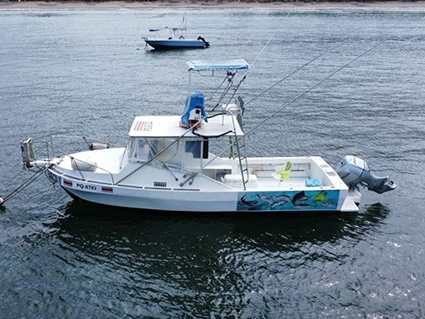
Best time for Dorado fishing near Jacó
Dorado may appear throughout the year, but May through October is a favored Central Pacific period. Seasonal rain can wash natural debris offshore, while currents gather floating material and bait into productive lines. Larger fish are often sought from September into November.
| Period | Dorado outlook | What creates opportunity | Other targets |
|---|---|---|---|
| January–April | Possible, but not the primary Dorado period | Isolated debris, bait and current edges | Sailfish, marlin and tuna |
| May–June | Favored season begins | First rains, floating cover and developing weed lines | Tuna and blue marlin |
| July–October | Strong planning window | Debris, current lines, bait and offshore structure | Tuna, marlin and possible wahoo |
| November–December | Good transition opportunities; larger fish possible | Changing currents and remaining floating cover | Blue marlin, tuna and building sailfish action |
How Dorado are caught
Offshore trolling
Crews troll rigged baits, feathers or small skirted lures while searching productive water. This also keeps the spread ready for tuna, sailfish and marlin.
Floating cover
Logs, branches, palm fronds and weed lines can shelter small organisms and baitfish, creating a feeding zone for Dorado and other predators.
Casting
When fish are located near the surface, the crew may switch to live bait, soft plastics, poppers or other casting presentations.
Bird activity
Working birds can reveal bait pushed near the surface. Captains watch how birds move rather than chasing every isolated sighting.
Current edges
Changes in water color, temperature and current can collect bait and help crews narrow the search area.
Keep one fish near
When legal and practical, the crew may keep a hooked fish in the water briefly because other Dorado can remain close—but multiple hookups are never guaranteed.
Dorado are rarely the only possibility
A full-day offshore spread works through habitat shared by several pelagic species. The best plan often stays flexible instead of refusing every bite that is not Dorado.
Yellowfin tuna
Tuna can appear with dolphins, birds or bait schools and may require trolling, live bait or casting.
Yellowfin tuna guide →Pacific sailfish
Sailfish are most consistent December–April but can be encountered outside the primary window.
Sailfish guide →Blue marlin
Marlin opportunities vary by season, water and trip type. All billfish are released.
Blue marlin guide →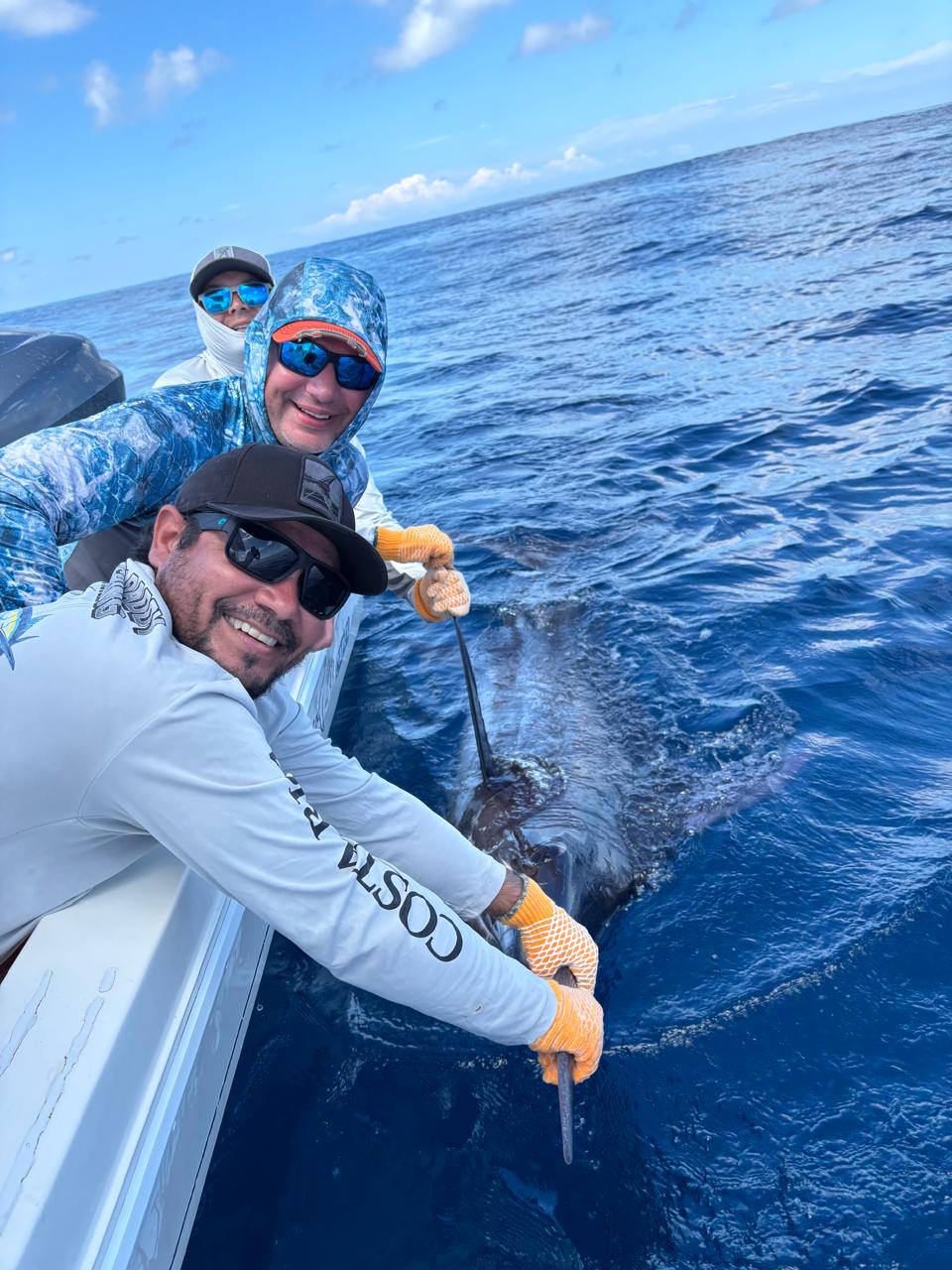
A full day gives you the strongest Dorado plan
Productive floating structure may be close one day and far away the next. A full day gives the captain time to reach good water, search different lines and adapt when the first area is empty.
Full-day offshore
- More search time and range
- Better mixed-species flexibility
- Time to switch tactics after finding fish
Half-day alternative
If your schedule only allows a half day, consider inshore fishing for roosterfish, snapper and jacks instead of making Dorado the only goal.
Choose for range, group size and comfort
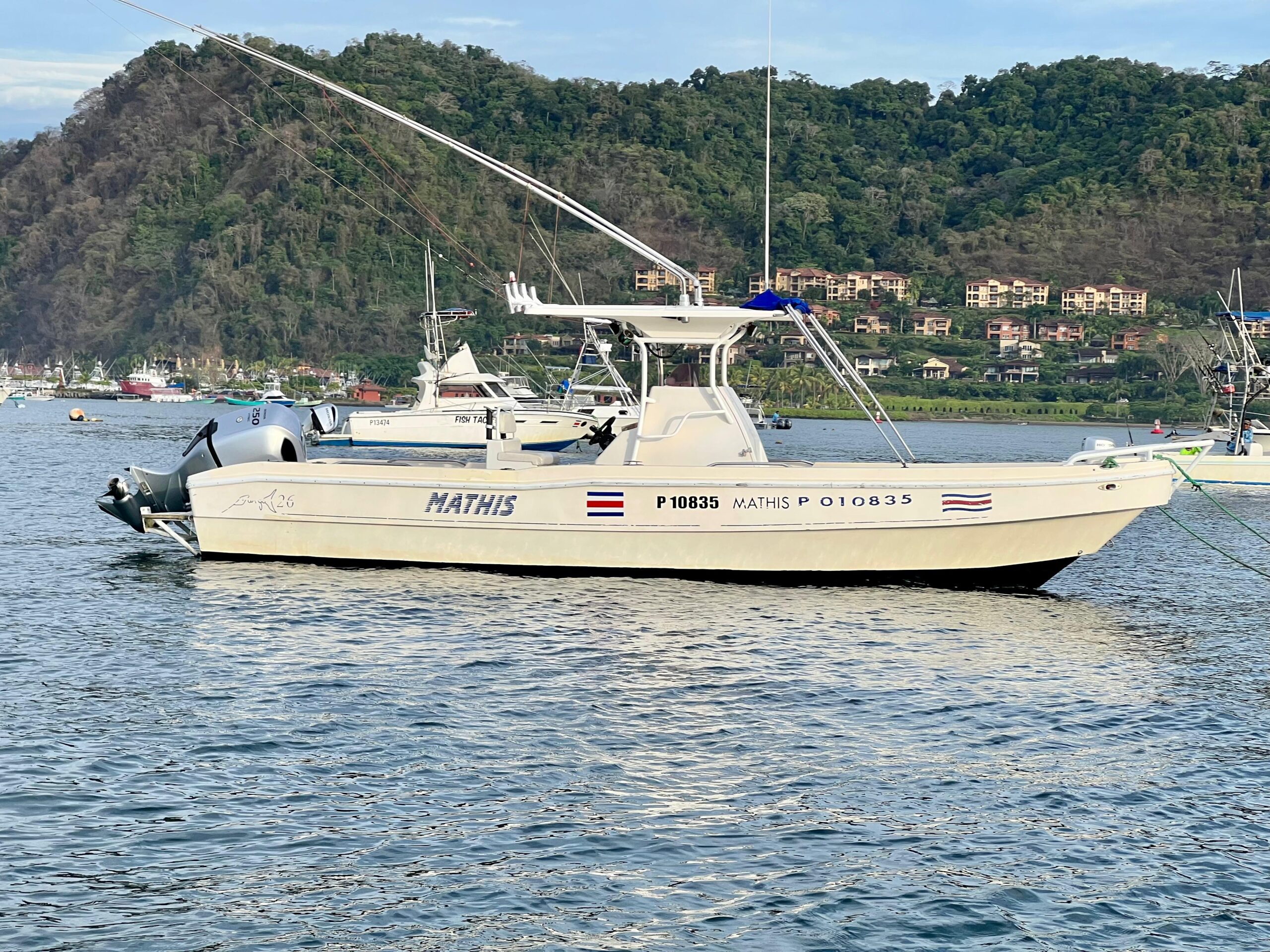
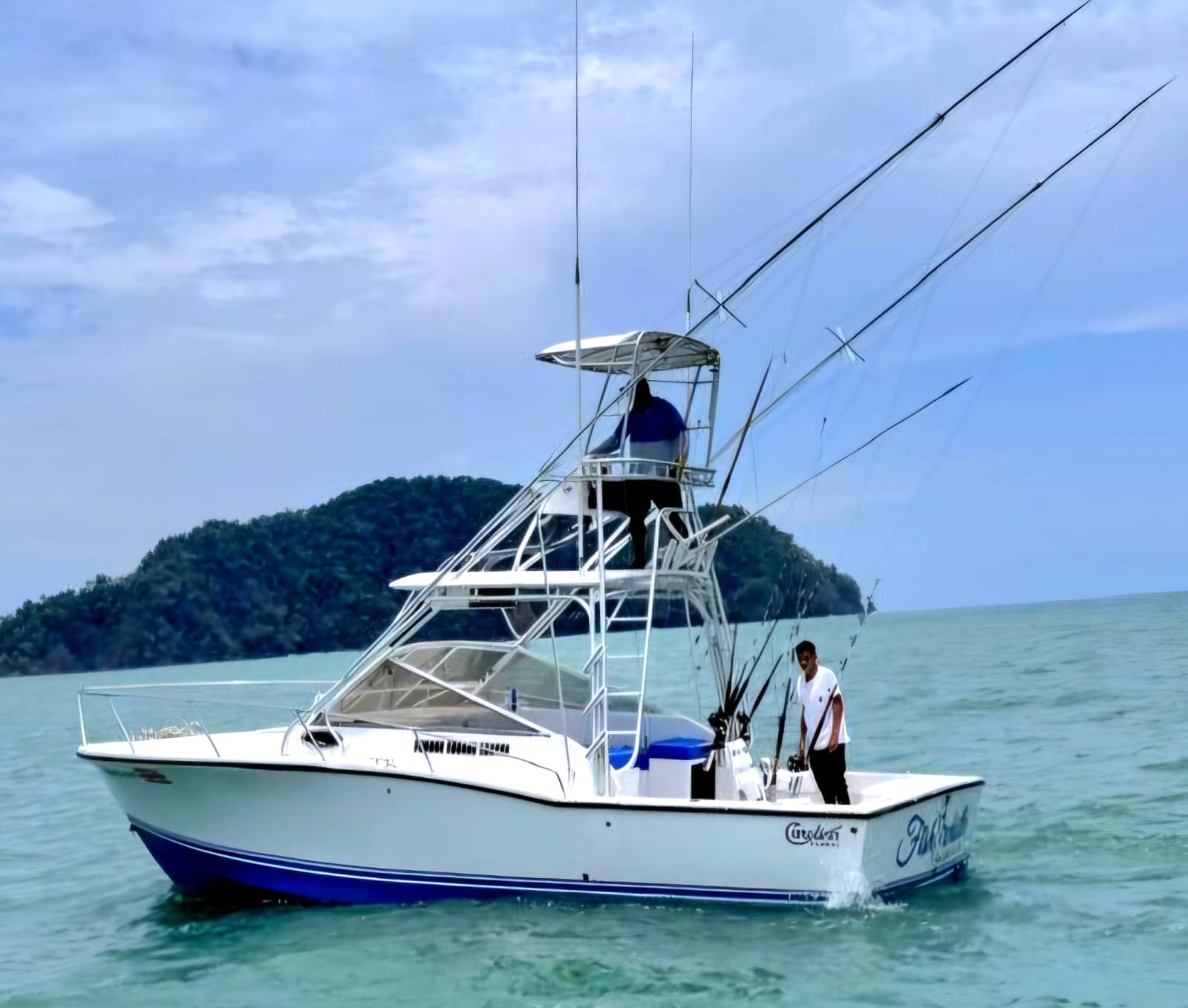
Dorado do not require the largest yacht, but offshore travel makes reliable equipment, shade and passenger comfort important. Compare capacity, restroom, cabin, air conditioning and fishing layout.
Responsible Dorado harvest
Dorado are valued food fish and may be retained when current Costa Rican regulations and captain guidance allow. That does not mean every fish needs to come back to the dock.
- Keep only a useful amount for your group.
- Follow the captain’s decision on legal and responsible retention.
- Release excess fish quickly and carefully.
- Confirm fish-cleaning arrangements with the boat.
- Ask your hotel or restaurant directly whether it can prepare guest-caught fish.
Unlike sailfish and marlin, which are catch and release, legal Dorado may become a memorable meal. Selective harvest helps preserve the experience for future anglers.
Why Dorado colors fade
Dorado can display intense blue, green and gold when active. These colors change rapidly after the fish leaves the water, so photos should be quick and handling should follow crew instructions.
Beginners welcome
Dorado can be an exciting first offshore fish. The crew prepares tackle and coaches anglers through the bite and fight.
First-time angler guide →Dorado fishing FAQ
When is the best time for Dorado near Jacó?
May through October is a favored period, with larger-fish opportunities often associated with September through November. Dorado can appear outside these windows when suitable water, bait and floating cover line up.
Are Dorado and mahi-mahi the same fish?
Yes. Dorado, mahi-mahi and dolphinfish are common names for Coryphaena hippurus. They are not related to marine mammals.
How far offshore are Dorado found?
The distance changes daily because weed lines, logs, current breaks and bait move. A full-day charter gives the captain more time and range to locate productive water.
Can beginners catch Dorado?
Yes. The crew sets the spread and coaches each angler. Dorado can jump and change direction quickly, so following instructions helps keep the line tight.
Can we keep Dorado?
Legal Dorado may be retained when the captain approves. Keep only what your group can use, and release excess fish responsibly.
Are multiple hookups guaranteed?
No. Dorado can school, and multiple bites are possible, but every day and every floating object is different. No catch or number of fish is guaranteed.
What else can we catch on a Dorado trip?
Depending on the season and location, the spread may also attract yellowfin tuna, sailfish, blue marlin or wahoo.
Related Costa Rica fishing guides
Check Dorado charter availability
Send your date, number of anglers, where you are staying and your other target species. We’ll recommend an available private boat and full-day offshore plan.
"*" indicates required fields